


When it comes to waterproofing your basement, the decision between interior and exterior methods isn’t a simple one. Both options have their merits and drawbacks, depending on factors like your home’s age, location, and specific water issues. You might appreciate the cost-effectiveness and minimal disruption of interior waterproofing, or lean towards the all-encompassing protection offered by exterior waterproofing. It’s a careful balancing act between immediate needs, long-term benefits, and budget constraints. Curious to find out which method is best for your home? Let’s take a closer look.
Understanding Basement Waterproofing
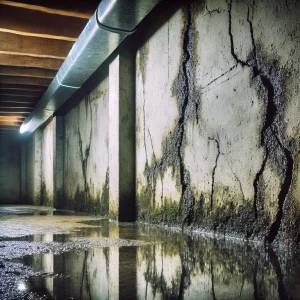 Three out of four homeowners struggle with damp basements. You’re not alone if you’re one of them. But understanding basement waterproofing can help you tackle this issue head-on.
When it comes to waterproofing, you’ve got options, and each one has its pros and cons.
Firstly, there’s exterior waterproofing, often referred to as positive side waterproofing. It’s named so because it tackles water where it’s coming from—the outside of your home.
It aims to prevent water from ever making contact with your basement walls. This method typically involves excavating around your home, applying a waterproof coating to the exterior walls, and installing a drainage system. It’s a heavy-duty solution that’s built to last.
Then, there’s interior waterproofing, otherwise known as negative side waterproofing. This method doesn’t stop water from reaching your basement walls. Instead, it manages the water once it’s already inside.
It’s often less invasive and less expensive than exterior waterproofing but isn’t as thorough.
Don’t forget, every home is unique. You’ll need to take into account your specific situation and needs before deciding on the right basement waterproofing method.
Interior Basement Waterproofing Explained
Let’s dive right into the details of interior basement waterproofing. This method targets the water that’s already seeped into your home, instead of preventing it from coming in. It’s often a go-to solution for existing water issues, like floods or humidity.
You’ll encounter a few different techniques in interior waterproofing. Sealants are a common choice. They’re typically applied to basement walls and floors to block out moisture. However, they’re not a permanent fix, as the pressure of water from outside can eventually break the seal.
Another popular technique is water drainage. This involves installing drains inside your basement to catch and divert water. The water is usually directed to a sump pump, which then pumps the water out of your home.
Lastly, there’s the interior wall and floor sealers. These work by sealing the basement’s surfaces to block moisture. Unlike sealants, these are more durable and can withstand higher levels of water pressure.
Knowing these techniques is essential to understanding interior waterproofing. It’s not just about stopping water from coming in, but also dealing with the water that’s already inside. This understanding will help you make an informed decision for your home.
Pros and Cons of Interior Waterproofing
Diving into the world of interior waterproofing, it’s important to weigh the advantages and disadvantages before making a decision.
On the one hand, interior waterproofing is often less expensive than exterior solutions. It’s also less invasive, as it doesn’t require digging around your home’s foundation. This makes it a quicker and cleaner process, and you won’t have to worry about damaging any landscaping.
Interior waterproofing can also be highly effective at managing water that’s already made its way inside. Methods like sump pumps and interior drain systems can remove water swiftly, protecting your basement from damage. Plus, these solutions can be installed year-round, meaning you’re not at the mercy of the weather.
However, there are downsides. Interior waterproofing doesn’t address the root cause of the water infiltration; it merely manages the symptoms. You’re still at risk of ongoing water damage to your foundation, which could lead to bigger issues down the line.
Additionally, some interior solutions can be seen as merely a “band-aid” fix, and may not increase the value of your home as much as exterior waterproofing might.
Ultimately, your choice will depend on your home’s specific needs and your budget.
Exterior Basement Waterproofing Unveiled
Peeling back the layers of exterior basement waterproofing, it’s a method that’s not just about managing symptoms, but tackling the root cause of water infiltration. Instead of simply diverting water away once it’s already made its way in, exterior waterproofing prevents it from entering in the first place.
The process begins with excavating the soil around your basement’s exterior walls down to the footings. This allows access to the foundation where a waterproof coating, typically a blend of asphalt and rubber polymers, is applied. This coating creates a moisture barrier, staunchly defending against water seepage.
In addition to the coating, a drainage system is installed. This usually involves a perforated pipe, or ‘weeping tile’, which is laid alongside the footing. The weeping tile collects any water that manages to penetrate the initial barrier and redirects it away from your home.
Lastly, a protection board is attached to the wall over the waterproof coating. This safeguards the coating during backfilling and provides an extra layer of insulation against the chill of the soil.
 Advantages and Disadvantages of Exterior Waterproofing
 Advantages and Disadvantages of Exterior Waterproofing
Your home’s defense against water damage hinges on the effectiveness of your chosen waterproofing method. When considering exterior waterproofing, it’s essential to understand both its advantages and disadvantages.
Exterior waterproofing’s primary advantage is its thorough protection. By addressing water issues outside the structure, it prevents water from ever reaching your basement walls. This method can also help protect the structural integrity of your home, as it reduces the pressure that water can exert on your basement walls. Additionally, it’s a one-time, long-term solution.
However, it’s not all sunshine and rainbows with exterior waterproofing. It’s usually more expensive than interior methods due to the extensive labor involved. Excavation around your home is required, which can lead to landscape disruption.
Plus, if your home is close to your neighbor’s, there mightn’t be enough space for the necessary machinery and work. Finally, it’s weather-dependent; poor conditions can delay the project.
In a nutshell, exterior waterproofing offers robust protection at a higher price and with potential landscape disruptions. It’s a decision you shouldn’t make lightly, particularly if budget and property aesthetics are significant factors for you.
Making the Right Waterproofing Decision
Given the considerations outlined above, it’s clear that making the right waterproofing decision can be complex. It’s not just about choosing between interior and exterior techniques, it’s about understanding your specific needs, the nature of your home’s structure, and the potential long-term impacts of your choice.
Start by evaluating your basement’s current condition. If you’re dealing with minor dampness issues, an interior sealant might suffice. However, if you’re noticing significant water intrusion, exterior waterproofing could be your best bet. Remember, it’s more invasive and costlier, but its benefits can be extensive and long-lasting.
Consider factors like the age of your home, the type of soil surrounding it, and the climate in your region. If you live in an area with heavy rainfall or if your home is older and has a weaker foundation, exterior waterproofing might be more suitable.
Don’t forget to factor in your budget. Exterior methods are generally more expensive upfront but can save you from costly repairs down the line. It’s essential to weigh the immediate costs against potential future savings.
Lastly, consult with a professional. They can provide personalized advice based on your situation to help you make the most informed decision.
So, you’re torn between interior and exterior basement waterproofing, huh? Well, interior methods are less invasive and budget-friendly, but they manage rather than prevent moisture. On the flip side, exterior waterproofing is pricier and more invasive, yet it offers a long-term fix by blocking water entry. To make the smartest choice, weigh up your basement’s history, the soil type, and your budget. Consulting a pro can also lead you to the right waterproofing path for your home.

Giulio and Jennifer Bevilacqua are the dedicated and passionate owners of Highlander Waterproofing, a trusted name in basement waterproofing and foundation repair. With a commitment to protecting homes and ensuring the safety and well-being of families, Giulio and Jennifer have built Highlander Waterproofing into a premier service provider in the region. Their hands-on approach, combined with years of industry expertise, has helped them earn a stellar reputation for delivering reliable and effective waterproofing solutions.
The Bevilacquas pride themselves on offering personalized service, using proven techniques, and employing a team of highly trained professionals who share their dedication to quality workmanship. As a family-owned and operated business, Giulio and Jennifer emphasize integrity, transparency, and a genuine concern for their clients’ needs. They believe in building lasting relationships with their customers by ensuring each project is completed to the highest standards. Highlander Waterproofing continues to thrive under their leadership, offering innovative solutions and exceptional customer service that homeowners can depend on.