


You’ve likely heard about hydrostatic pressure, but have you ever considered its impact on basement waterproofing? This unseen force, born from water accumulating in the soil around your home’s foundation, can lead to issues like flooding and structural damage. Sure, there are solutions like exterior drainage systems and interior sealants, but how effective are they really? Let’s dig deeper into this topic. There’s a whole world of knowledge waiting to help you protect your home from the potential perils of hydrostatic pressure.
Understanding Hydrostatic Pressure
An astounding majority of homeowners may be unaware of the term ‘hydrostatic pressure’, yet it plays a significant role in the overall health of your home’s foundation.
Hydrostatic pressure refers to the pressure exerted by a fluid at equilibrium due to the force of gravity. In the context of your house, this fluid is water accumulating in the soil surrounding your home’s foundation.
When it rains or snow melts, water seeps into the ground. If your home’s drainage system isn’t effective, this water gathers around your foundation, creating hydrostatic pressure. This pressure can become a problem as it pushes against the foundation walls, potentially causing leaks, cracks, and in severe cases, structural damage.
In a basement, for example, hydrostatic pressure can force water through cracks in the floor or walls, resulting in a damp, musty basement. This isn’t just an aesthetic issue, it’s a structural one.
Over time, hydrostatic pressure can weaken the structural integrity of your foundation, leading to costly repairs down the line. Consequently, understanding and mitigating hydrostatic pressure is essential to maintaining your home’s health.
The Science Behind Hydrostatic Pressure
Let’s now turn your attention to the science behind hydrostatic pressure.
This invisible force is a result of the weight of the water pushing against the walls of your basement.
It’s essential to comprehend this principle because it directly influences the effectiveness of your basement waterproofing.
Understanding Hydrostatic Pressure
Hydrostatic pressure might seem like a complex concept, but you might be surprised at how simple it’s once you grasp the basics. Fundamentally, it’s the force exerted by a fluid at equilibrium due to the force of gravity. It’s a vital aspect of fluid mechanics, a branch of physics that deals with the behavior of liquids and gases.
Imagine a container filled with water. The pressure at any point in the water depends on two things: the depth of the point and the density of the water. The deeper you go, the greater the pressure, because there’s more water above you exerting force downwards due to gravity. It’s why you feel increased pressure on your ears when you dive deep into a swimming pool.

Hydrostatic pressure isn’t just about water; it applies to all fluids, including the air around us. It’s why we experience atmospheric pressure. Although you don’t feel it, there’s a considerable amount of air above you, pushing down due to gravity, exerting pressure on your body.
Understanding hydrostatic pressure is essential, not just for physicists, but for anyone dealing with fluid systems, including basement waterproofing. It’s the science behind why water might seep into your basement.
Effects on Basement Waterproofing
When it comes to basement waterproofing, understanding the effects of hydrostatic pressure is essential. Hydrostatic pressure refers to the force that groundwater exerts on your basement walls and floor. Over time, this pressure can greatly compromise the structural integrity of your property.
Imagine your basement as a boat floating in a sea of soil. When it rains, your “soil sea” absorbs water, increasing the external pressure on your basement. If your basement’s waterproofing is inadequate, water will find its way in, just like a boat taking on water.
Hydrostatic pressure doesn’t just cause wet basements. It can also lead to severe issues such as basement wall cracks. These cracks aren’t just unsightly; they can also lead to structural problems if left unaddressed.
Moreover, even tiny cracks can allow water ingress, leading to damp conditions ideal for mold growth, which can have serious health implications.
That’s why it’s imperative to address the root cause – hydrostatic pressure.
Hydrostatic Pressure’s Role In Basement Flooding
Let’s turn our focus to how hydrostatic pressure contributes to basement flooding. Understanding this concept is critical because when groundwater levels rise, increased hydrostatic pressure can cause water to seep through basement floors and walls.
We’ll analyze how this pressure interacts with your home’s structure, and why your basement’s waterproofing system needs to effectively counteract these forces.
Understanding Hydrostatic Pressure
Imagine coming home after a heavy rainstorm, only to find your basement flooded. You’re likely dealing with the effects of hydrostatic pressure. But what’s that? Let’s take a moment to understand it.
Hydrostatic pressure is a term used in physics to describe the pressure exerted by a fluid at equilibrium due to the force of gravity. Fundamentally, it’s the pressure that a fluid’s weight causes.
When it comes to your basement, this fluid is the water in the ground surrounding your house. The pressure increases with depth, meaning that your basement, being the lowest part of your house, is under the most pressure.
This pressure acts on your basement walls and floor, pushing against any cracks or weak points. If these areas aren’t sealed properly, water can seep in, causing what you dread – a flooded basement.
Understanding hydrostatic pressure is vital in identifying why your basement might be susceptible to flooding. It’s the underlying reason why waterproofing is so important.
It’s not just about keeping water out, it’s about managing this pressure to prevent damage.
Hydrostatic Pressure and Flooding
Nine out of ten times, the culprit behind your basement’s flooding is hydrostatic pressure.
It’s the force exerted by water at rest, and it increases with depth due to the weight of water pressing down from above. When the soil around your house becomes saturated from heavy rain or melting snow, the water pressure against your basement walls and floor skyrockets.
This pressure can cause cracks, allowing water to seep into your basement. But it doesn’t stop there. If the pressure becomes too great, it can even push through solid concrete. Not only does this result in a wet basement, but it can also lead to significant structural damage over time.
The key to preventing this is effective waterproofing. This includes both interior solutions, such as sealants and sump pumps, and exterior solutions, such as drainage systems and water-resistant barriers.
But don’t underestimate the importance of regular maintenance. Keeping your gutters clean, for instance, can help prevent water from pooling around your home’s foundation.
Waterproofing: The Basement’s Defense
Shielding your basement from the relentless onslaught of hydrostatic pressure, waterproofing serves as a critical defense mechanism.
It’s your home’s primary line of defense, a barrier that prevents damaging water from infiltrating your space. It’s not a mere cosmetic fix; rather, it’s a fundamental aspect of structural integrity.
Waterproofing isn’t a one-size-fits-all solution. It’s tailored to your home’s unique needs, taking into account factors like your home’s construction, soil type, and the region’s climate.
There’s no shortcut; it’s a complex process, entailing both internal and external strategies. Internally, it involves applying waterproof coatings and sealants, and installing water control systems to divert any potential leaks. Externally, it’s about creating a barrier, using waterproof membranes or coatings to prevent water from penetrating the basement walls.
Waterproofing’s effectiveness lies in its proactive approach. It doesn’t wait for damage to happen. It anticipates potential weak spots and fortifies your basement against them.
And while it might seem like a substantial cost upfront, it’s a wise investment, saving you from costly repairs in the future.
Hydrostatic Pressure Vs Basement Waterproofing
Why should you care about hydrostatic pressure as a homeowner? It’s simple. Hydrostatic pressure is a key opponent in the battle for a dry, healthy basement. This hydraulic force is a result of water accumulation in the soil surrounding your home’s foundation.
When the water pressure becomes too great, it can push against your basement walls and floor, causing leaks and weakening your home’s structural integrity.
Basement waterproofing is your defense mechanism against this force. It’s designed to guide water away from your home, thereby reducing hydrostatic pressure. Effective waterproofing methods include interior water drainage, exterior drainage, and the use of a sump pump system.
However, it’s not a one-size-fits-all solution. The effectiveness of these techniques depends on factors like soil type, groundwater level, and the quality of your home’s construction.
Potential Hazards of Hydrostatic Pressure
Understanding the potential hazards of hydrostatic pressure isn’t just a matter of home maintenance—it’s an issue of safety. Hydrostatic pressure can cause severe damage to your basement, and in turn, your property value. It’s the force that groundwater exerts on your basement walls and foundation.
The damage can be gradual, but it’s often devastating. Cracks can form in your foundation, allowing water to seep into your basement. This isn’t just a threat to your belongings stored there; it’s a threat to the structural integrity of your home. Continuous water intrusion can lead to mold growth, creating a health hazard for you and your family.
Another potential hazard is soil displacement. Hydrostatic pressure can push soil away from your foundation, causing it to shift and crack. This can lead to uneven floors, doors that won’t close properly, and walls that start to lean or bow.
It’s also worth noting that these issues aren’t just costly to fix—they can be dangerous. A compromised foundation can lead to catastrophic failure, putting your home and safety at risk.
Understanding these hazards is key to protecting your home from hydrostatic pressure.
Preventing Hydrostatic Pressure Damage
To prevent the havoc wrought by hydrostatic pressure, you’ll need to implement certain strategies. First, you’ll have to examine your property’s landscape. If it slopes towards your home, water will naturally accumulate around your basement, increasing hydrostatic pressure. By regrading your property to incline away from your home, you’ll effectively reduce the chances of water accumulation.
Next, consider your gutters and downspouts. They’re your first line of defense, directing rainwater away from your foundation. If they’re clogged or damaged, they can’t do their job effectively, leading to water buildup around your foundation. Regular maintenance and inspection are key to ensuring they’re in good condition.
Then, check your basement’s drainage system. If it’s insufficient or not functioning correctly, hydrostatic pressure can build up. Make sure your drainage system can handle heavy rains without becoming overwhelmed.
Waterproofing Solutions for Basements
You might be wondering how to keep your basement dry and safe from the damaging effects of hydrostatic pressure. There are several waterproofing solutions you can consider and each has its own set of advantages.
Firstly, you can install a sump pump system. This method collects water that seeps into your basement and expels it outside, away from your home’s foundation. Make sure to maintain it regularly to guarantee its efficiency.
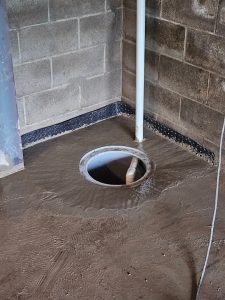
Secondly, you can opt for interior waterproofing, also known as water control. This doesn’t stop the water from penetrating the walls, but it does manage water that’s already entered, directing it to your drainage system.
Another solution is exterior waterproofing. This involves applying a waterproof coating or membrane on the outside of your basement walls to prevent water intrusion. It’s more costly and involves excavation, but it’s the best way to protect your basement from hydrostatic pressure.
Lastly, consider installing a French drain system. It collects water before it enters your basement and redirects it away from your home.
Case Studies: Hydrostatic Pressure and Waterproofing
Let’s dive right into some real-world examples of how hydrostatic pressure impacts basements and the effectiveness of various waterproofing methods.
A study in Connecticut showed a basement experiencing severe flooding due to high hydrostatic pressure. The homeowner had attempted to waterproof the basement using a simple sealant, but it was no match for the pressure. Water seeped in, damaging the basement’s structure and contents.
In another case in Michigan, a homeowner installed a sump pump to combat the hydrostatic pressure. However, despite its high capacity, it couldn’t keep up with the water influx during heavy rains. The basement flooded, causing significant damage and mold growth.
Now, let’s look at a more successful case in New York. Here, the homeowner used a combination of interior drainage systems and exterior waterproofing. Despite the area experiencing high rainfall and hydrostatic pressure, the basement remained dry.
This method proved more effective as it tackled the pressure issue from both inside and outside.
These cases highlight the varying degrees of success with different waterproofing methods. It’s clear that understanding hydrostatic pressure is essential in selecting the correct waterproofing strategy for your basement.
Effective solutions often require a multi-faceted approach, considering both the interior and exterior of the basement.
Don’t let hydrostatic pressure be your basement’s Achilles’ heel. Be proactive, understand its science and impact. It’s not just about a dry basement, but about safeguarding your home’s structural integrity and health. Like Noah preparing for the flood, arm yourself with effective waterproofing solutions. Remember, forewarned is forearmed. Don’t wait for the deluge; take action now to guarantee your basement stands strong against the relentless push of hydrostatic pressure.

Giulio and Jennifer Bevilacqua are the dedicated and passionate owners of Highlander Waterproofing, a trusted name in basement waterproofing and foundation repair. With a commitment to protecting homes and ensuring the safety and well-being of families, Giulio and Jennifer have built Highlander Waterproofing into a premier service provider in the region. Their hands-on approach, combined with years of industry expertise, has helped them earn a stellar reputation for delivering reliable and effective waterproofing solutions.
The Bevilacquas pride themselves on offering personalized service, using proven techniques, and employing a team of highly trained professionals who share their dedication to quality workmanship. As a family-owned and operated business, Giulio and Jennifer emphasize integrity, transparency, and a genuine concern for their clients’ needs. They believe in building lasting relationships with their customers by ensuring each project is completed to the highest standards. Highlander Waterproofing continues to thrive under their leadership, offering innovative solutions and exceptional customer service that homeowners can depend on.