


You’ve likely heard of French drains as a possible solution to basement moisture issues, but are they the right fit for your home? These systems, adept at rerouting water away from your house, can be a saving grace for some properties. But they aren’t without their complications. Cost, maintenance, and installation risks are all aspects you’ll need to weigh. So, how can you tell if a French drain is the best choice for your basement? Stick around – we’re about to unpack the finer details.
French Drain Essentials: Moisture Control, Costs & MaintenanceKey Takeaways
- French drains are effective in controlling moisture and preventing basement flooding by diverting groundwater away from homes.
- The construction involves digging a trench, laying gravel and a perforated pipe, covered with more gravel and soil for protection.
- They require regular maintenance to prevent clogs from debris or soil, and can pose a risk to utility lines during installation.
- Installation costs can be high, and landscaping restoration post-installation may add to the overall expense.
- Site assessment, including evaluation of basement wetness, local water table levels, and landscape features, is crucial in decision-making.
Understanding the French Drain
A French drain, the knight in shining armor for your soggy backyard, is a simple yet ingenious system for removing excess moisture. You might be wondering, what makes it stand out among other drain types? It’s all in the design and water management abilities.
This drain type consists of a trench filled with gravel, with a perforated pipe nestled at the bottom. The magic begins when water seeps into the trench, getting filtered by the gravel before entering the pipe. It’s then carried away from your property, preventing any moisture damage.
But, there’s more to the French drain than meets the eye. It’s crucial to note that these drains come in two main varieties: internal and external.
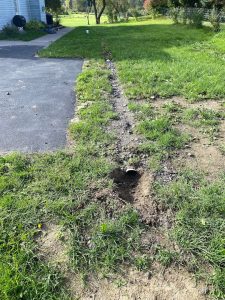
External French drains manage water at ground level, while internal types control water that’s already made its way into your basement.
Choosing the right one depends on your specific needs. If you’re dealing with surface water, an external drain could be your best bet. However, if water’s seeping into your basement, an internal system might be the way to go.
In short, understanding the French drain is key to effective water management in your home.
How French Drains Work
You might be wondering how French drains work.
Primarily, they function by providing an easy path for water to flow away from your property, which we’ll examine in detail when we discuss French Drain construction.
In order to fully understand this, we’ll also need to consider their benefits and drawbacks, which will give you a comprehensive understanding of their practicality.
French Drain Construction
While it might seem complex, constructing a French drain is all about strategic planning and execution. It’s crucial to understand that the key to successful drainage techniques lies in a detailed understanding of soil considerations.
To start, dig a trench in your desired location. The trench should be deeper than your basement floor and should slope away from your home. Next, lay a layer of gravel in the trench, followed by a perforated pipe. The pipe should be wrapped in landscaping fabric to prevent soil from clogging the holes.
Now let’s break it down further in a table:
| Step | Material | Purpose |
|---|---|---|
| 1 | Trench | Directs water flow |
| 2 | Gravel | Filters and drains water |
| 3 | Perforated pipe | Collects and carries water |
| 4 | Landscaping fabric | Prevents soil from clogging the pipe |
| 5 | More gravel and soil | Covers and protects the system |
Benefits and Drawbacks
Nearly every homeowner can reap substantial benefits from installing a French drain. These systems provide superior drainage efficiency, significantly reducing the risk of water damage to your home’s foundation.
By diverting groundwater away from your property, they also enhance overall water management within your landscape. French drains are especially beneficial if you’ve got a sloping yard or your basement tends to flood during heavy downpours.
They’re also a great solution if you’re struggling with soggy lawns or waterlogged gardens, as they can help disperse excess moisture evenly throughout your property.
But while French drains can be a game-changer, they come with their own set of drawbacks. The installation process can be quite labor-intensive and may require professional assistance.
Depending on the complexity of the system and the size of your property, the costs can also rack up. Furthermore, they require routine maintenance to prevent blockages from leaves or other debris.
If you’re not careful, you could also potentially damage utility lines during installation. Therefore, before you dive in, it’s crucial to weigh the benefits against the potential challenges.
It’s about finding the right balance for your specific needs and circumstances.
The Benefits of French Drains
The implementation of French drains can provide a multitude of benefits for homeowners. First and foremost, these systems excel at flood prevention. Whether you’re dealing with seasonal rainstorms or more sporadic weather events, a French drain can help protect your basement from the encroachment of unwanted water.
They work by creating a downward-sloping trench filled with gravel and a pipe that directs water away from your home. This simple yet effective design allows them to efficiently channel excess water, shielding your basement from potential flooding and water damage.
Furthermore, French drains are phenomenal tools for moisture control. If you’ve ever had to deal with a damp or musty basement, you’ll understand the importance of this.
Potential Drawbacks of French Drains
While you might appreciate the water management benefits of French drains, it’s crucial to consider the potential drawbacks before making a commitment.
High installation costs can be a deterrent, particularly for complex or large-scale projects.
Additionally, you’ll need to factor in the possibility of maintenance and repair issues that could arise over time.
High Installation Costs
Despite their numerous benefits, French drains can present a significant financial investment upfront. High expenses are often associated with their installation, making budget considerations a crucial factor in your decision-making process.
The installation of a French drain involves:
- Excavation: This is a labor-intensive process that often requires the use of heavy machinery.
- Material costs: The drain itself, gravel or rock fill, and potentially a sump pump all add to the total cost.
- Professional services: The intricacies of installing a French drain usually necessitate hiring a professional, adding to the overall expense.
You must also account for the potential need to restore landscaping or repair hardscaping disrupted by the installation process. While these costs vary depending on your specific situation, they can quickly add up and should be factored into your overall budget.
French drains offer a reliable solution for water management issues, but their high upfront costs may be prohibitive for some homeowners.
Therefore, it’s important to carefully analyze these expenses and compare them with other potential solutions to make the most informed decision for your basement’s needs.
Maintenance and Repair Issues
Apart from the upfront costs, another potential drawback you’ll face with French drains is the ongoing maintenance and possible repairs.
Over time, these drainage systems can become susceptible to drain clogging due to debris, soil, or roots that infiltrate the gravel and perforated pipe system. This clogging can severely impact the drain’s functionality, leading to ineffective water diversion, and eventually, water pooling around your property.
Regular maintenance is a must to prevent such problems, which may include routine inspections, cleaning, and sometimes, replacement of certain parts.
Moreover, if you’re in an area with heavy soil movement, your French drain system may shift or collapse, demanding costly repairs.
Additionally, during harsh winters, the water in the drainage system might freeze, causing blockages and potential damage to your home’s foundation.
It’s crucial to consider insulation or heating elements to prevent this issue, which can increase the overall maintenance cost.
In essence, while French drains can be an effective solution for basement water problems, they aren’t a set-it-and-forget-it solution.
You’ll need to factor in these potential maintenance and repair issues when deciding if a French drain is right for your home.
Installing a French Drain: The Process
Often, homeowners find themselves needing to install a French Drain to manage excessive water accumulation. This process isn’t as daunting as it might seem if you’ve got the right drainage solutions and installation tips in hand.
First, you’ll need to determine where your water is coming from and where you want it to go. This involves digging a trench in the direction of the water flow.
Next, you’ll lay down a bed of gravel in the trench and place a perforated pipe on top. This pipe’s purpose is to collect and redirect the water.
Finally, you’ll cover the pipe with more gravel, then soil and grass.
To help visualize, consider the following:
- Picture digging a trench that’s about 2 feet deep and 1 foot wide.
- Visualize filling this trench with a 2-inch layer of gravel, placing a perforated pipe over it, then covering it again with gravel.
- Imagine replacing the top soil and replanting the grass for a seamless look.
Evaluating if French Drains Are Right for You
Before deciding on installing a French Drain, it’s crucial to evaluate if this drainage solution is indeed right for your situation.
You’ll need to conduct a thorough site assessment, looking at both the interior and exterior of your property. It’s not just about whether you have a wet basement; it’s about why it’s wet in the first place.
Particularly, consider the water table level in your area. If it’s high, a French Drain mightn’t be the best solution as it could potentially bring more water into your basement.
On the other hand, if your water table is low but you’re experiencing water seepage due to factors such as poor soil drainage or sloping terrain, a French Drain could be highly effective.
Also, evaluate your property’s landscape. If your house sits at the bottom of a sloping yard, or if water tends to pool around your foundation, a French Drain could be an excellent solution.
However, if your property is flat or sloping away from the house, other drainage solutions might be more suitable.
Ultimately, knowing the specifics of your situation will guide you in making the best decision.
Frequently Asked Questions
What Is the Average Cost of Installing a French Drain in a Basement?
You’re likely wondering about the average cost of installing a French drain in your basement.
It’s not a simple answer due to cost variations. Several installation factors can affect the final price, including your basement’s size, the materials used, and labor costs.
However, generally, you can expect to shell out anywhere from $2,800 to $6,500.
It’s best to get a detailed quote to understand the potential costs fully.
Can a French Drain System Be Used in Locations Other Than Basements?
Absolutely, you can use a French drain system in locations other than basements.
They’re very effective for outdoor applications like preventing surface water from damaging your home’s foundation.
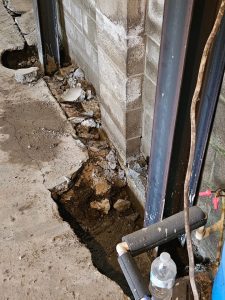
However, bear in mind that installation requires careful planning.
You’ve to consider soil type, slope, and location.
So, before digging, study the landscape, and ensure you’re not disrupting any utility lines.
Are There Eco-Friendly Alternatives to French Drains?
Absolutely, there are eco-friendly alternatives to French drains.
Rain gardens and bioswales are excellent for sustainable drainage. They naturally manage rainwater by directing it to plants that need it. You’re also reducing stormwater runoff, which is a huge plus for the environment.
Permeable pavers can also be a great choice. They allow rainwater to seep into the ground, reducing runoff and erosion.
How Often Should a French Drain Be Cleaned or Maintained?
You should inspect your French drain every few months for debris buildup.
Full cleaning and maintenance should be performed at least once a year. If you’re in an area with heavy rainfall or your soil doesn’t drain well, you might need to do this more often.
Regular French drain maintenance ensures it works effectively, preventing basement flooding.
Regular cleaning keeps the system from getting clogged up, which can cause costly damages.
What Are the Legal Implications of Installing a French Drain, if Any?
When you’re considering installing a French drain, you’ve got to understand the legal implications.
You can’t just change drainage patterns without considering the impact on neighboring properties. You’ll need to check local drainage regulations, as you may require a permit.
You should also be aware of any property easements. If you’re not careful, you could end up in a legal dispute.
So, are French drains right for your basement? Weigh the benefits of effective water management and flood prevention against potential drawbacks like installation costs and maintenance. Remember, a thorough site assessment is crucial before deciding. It’s not a one-size-fits-all solution. Tailoring to your property’s unique conditions is key. In the end, it’s about achieving optimal water management for your home, ensuring its safety and longevity.

Giulio and Jennifer Bevilacqua are the dedicated and passionate owners of Highlander Waterproofing, a trusted name in basement waterproofing and foundation repair. With a commitment to protecting homes and ensuring the safety and well-being of families, Giulio and Jennifer have built Highlander Waterproofing into a premier service provider in the region. Their hands-on approach, combined with years of industry expertise, has helped them earn a stellar reputation for delivering reliable and effective waterproofing solutions.
The Bevilacquas pride themselves on offering personalized service, using proven techniques, and employing a team of highly trained professionals who share their dedication to quality workmanship. As a family-owned and operated business, Giulio and Jennifer emphasize integrity, transparency, and a genuine concern for their clients’ needs. They believe in building lasting relationships with their customers by ensuring each project is completed to the highest standards. Highlander Waterproofing continues to thrive under their leadership, offering innovative solutions and exceptional customer service that homeowners can depend on.