


Discovering a crack in your basement wall or noticing a slight inward tilt can be a source of immense stress for any homeowner. In regions like Western Pennsylvania, Western New York, and Northeast Ohio, the soil is often packed with heavy clay. This clay acts like a sponge, expanding significantly when wet and putting thousands of pounds of “hydrostatic pressure” against your foundation. When the pressure exceeds the strength of the wall, the structure begins to fail, leading to bowing, leaning, or shearing.
At Highlander Waterproofing & Foundation Repair, we specialize in custom-engineered solutions to stop this movement. Two of the most effective methods for stabilizing residential foundations are wall anchors and carbon fiber straps. However, they are not interchangeable. Understanding the technical differences between these systems is the first step in protecting your home’s structural integrity and its long-term resale value.
Understanding the Force: Why Foundation Walls Bow Inward

Before choosing a repair method, it is vital to understand the “why” behind the damage. Most foundation failure in our service area is caused by the expansion of clay-rich soils. During heavy rain or spring snowmelt, the soil surrounding your home becomes saturated. This creates hydrostatic pressure—a force that pushes horizontally against your basement walls.
Over time, this relentless pressure causes the masonry to fatigue. You might notice horizontal cracks appearing across the middle of the wall, or the top of the wall may begin to tip inward. If left unaddressed, this can lead to total wall collapse. Both wall anchors and carbon fiber straps are designed to counteract this pressure, but they do so using very different mechanical principles.
Carbon Fiber Straps: The Low-Profile Reinforcement
Carbon fiber is a high-tech material used in the aerospace and automotive industries because it is incredibly strong yet lightweight. When applied to a foundation, these straps are bonded directly to the interior of the basement wall using high-strength epoxy. This creates a tension-based reinforcement that is stronger than steel.
When Carbon Fiber Is the Best Choice
Carbon fiber is ideal for walls that are showing early signs of distress—specifically horizontal cracking or bowing that is less than two inches out of plumb. Because the straps are thin (roughly the thickness of a penny), they are a “low-profile” solution. Once installed and painted over, they are nearly invisible, making them a favorite for homeowners who plan to finish their basements.
Key Benefits of Carbon Fiber:
- Non-Invasive Installation: There is no digging required outside the home.
- Maintenance-Free: Once the epoxy cures, the straps require no further adjustment.
- Aesthetic Appeal: They do not take up floor space and can be easily concealed with paint or drywall.
Foundation Wall Anchors: Heavy-Duty Restoration
While carbon fiber reinforces a wall where it stands, wall anchors go a step further. An anchor system consists of an interior wall plate, an exterior earth anchor, and a high-strength steel rod connecting the two. This system utilizes the stable soil deep in your yard to pull the wall back toward its original position.
When Wall Anchors Are Required
If your basement walls are severely bowed (typically more than two inches) or if the wall is “shearing” at the base, carbon fiber may not be enough. Wall anchors provide the mechanical leverage necessary to stabilize a wall that has suffered significant structural compromise. Because the rod is threaded, a technician can tighten the anchor over time, often successfully straightening the wall over several months or years.
Key Benefits of Wall Anchors:
- Wall Straightening: The only solution that offers the potential to move the wall back to level.
- Maximum Strength: Capable of stabilizing the most severe structural failures.
- Minimal Interior Footprint: The wall plates are relatively small, though they do require occasional access for tightening.
The Highlander Difference: Custom Engineering
At Highlander Waterproofing & Foundation Repair, we don’t believe in a “one size fits all” approach. Every home sits on a different grade and features unique soil conditions. A solution that works for a home in Pittsburgh might not be suitable for a property in Buffalo or Syracuse. Our experts conduct a thorough multi-point inspection to measure the degree of deflection in your walls before recommending a specific system.
Furthermore, our repairs are backed by a Lifetime Transferable Warranty. Whether we use carbon fiber or wall anchors, we are committed to a permanent fix that protects your family’s safety and your property’s value for the long haul.
Frequently Asked Questions
Can I finish my basement after installing wall anchors?
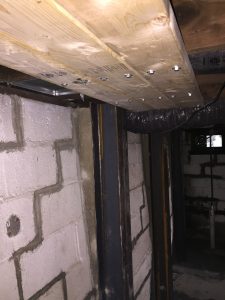
Yes, though you should leave small access panels where the anchor nuts are located. This allows our technicians to tighten the system periodically to help straighten the wall. If you want a completely flat wall with no access panels, carbon fiber is often the better choice for walls with minor bowing.
How long does the installation take?
Most foundation stabilization projects, whether using straps or anchors, can be completed in just one to two days. Our crews work efficiently to minimize disruption to your home, and we ensure the workspace is clean before we leave.
Will my foundation cracks go away after stabilization?
The stabilization stops the movement, which is the most important factor. While we seal the cracks as part of the process, the visible “scar” may remain. If we use wall anchors to successfully straighten the wall, many of the cracks will close significantly over time.
Protect Your Home with an Expert Assessment
Ignoring foundation issues only leads to more expensive repairs down the road. Whether your home requires the high-tech reinforcement of carbon fiber or the heavy-duty restoration of a wall anchor system, Highlander Waterproofing & Foundation Repair has the expertise to secure your home. We serve homeowners throughout Pennsylvania, New York, and Ohio with award-winning service and ethical pricing.
Ready for peace of mind? Contact Highlander today for your free, no-pressure foundation inspection and custom repair plan.

Giulio and Jennifer Bevilacqua are the dedicated and passionate owners of Highlander Waterproofing, a trusted name in basement waterproofing and foundation repair. With a commitment to protecting homes and ensuring the safety and well-being of families, Giulio and Jennifer have built Highlander Waterproofing into a premier service provider in the region. Their hands-on approach, combined with years of industry expertise, has helped them earn a stellar reputation for delivering reliable and effective waterproofing solutions.
The Bevilacquas pride themselves on offering personalized service, using proven techniques, and employing a team of highly trained professionals who share their dedication to quality workmanship. As a family-owned and operated business, Giulio and Jennifer emphasize integrity, transparency, and a genuine concern for their clients’ needs. They believe in building lasting relationships with their customers by ensuring each project is completed to the highest standards. Highlander Waterproofing continues to thrive under their leadership, offering innovative solutions and exceptional customer service that homeowners can depend on.