


If you have ever dealt with a damp basement or a soggy yard, you have likely heard a variety of terms thrown around by contractors: “French drains,” “footer tiles,” “perimeter drains,” and “weeping tiles.” In the Tri-State area—where the heavy clay soil of Pennsylvania, Ohio, and New York holds onto moisture like a sponge—choosing the wrong system can be a costly mistake. While both footer tiles and French drains are designed to move water, they serve entirely different purposes and protect different parts of your home.
At Highlander Waterproofing & Foundation Repair, we believe in educating homeowners so they can make the best decision for their property’s structural health. In this guide, we will break down the technical differences between these two systems to help you determine which one your home actually needs.
What is a Footer Tile? (The Internal Foundation Guardian)
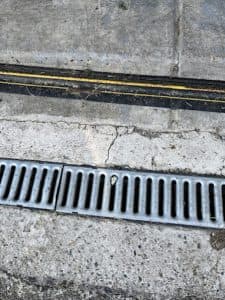
A footer tile (often called an interior drainage system) is your home’s primary defense against groundwater and hydrostatic pressure. As the name suggests, these pipes are installed at the “footer”—the very base of your foundation wall—below the level of your basement floor.
In many older homes in Buffalo or Pittsburgh, original clay footer tiles have collapsed or become clogged with silt over the decades. When this happens, groundwater has nowhere to go. It builds up under the floor and against the walls, eventually forcing its way through cracks or the “cove joint” (where the wall and floor meet).
How an Interior Footer Tile System Works:
- Pressure Relief: We remove a section of the concrete floor around the perimeter and install a perforated pipe in a bed of washed stone.
- Collection: The system collects water from under the floor and from the hollow cores of your foundation blocks.
- Discharge: The water is channeled to a high-capacity sump pump, which ejects the water safely away from the house.
What is a French Drain? (The External Yard Specialist)
While the term “French drain” is often used as a catch-all, in professional waterproofing, it typically refers to an exterior surface drainage system. If your basement is dry but your backyard is a swampy mess, or if water pools near your foundation after a Rochester rainstorm, a French drain is likely your solution.
A French drain is essentially a trench filled with gravel and a perforated pipe that acts as a “path of least resistance” for surface water. It is designed to intercept water that is traveling across your yard or soaking into the top layers of soil before it ever reaches your foundation.
When You Need a French Drain:
- Soggy Lawns: You have standing water in your yard 24 hours after a rain event.
- Negative Grading: Your yard slopes toward your house rather than away from it.
- Surface Runoff: Water from a neighbor’s higher property is flowing onto your lawn.
Key Differences: Depth, Location, and Purpose
The most significant difference is depth. A French drain is usually shallow (12 to 24 inches deep) and is designed to catch surface water. A footer tile is deep (6 to 8 feet deep, depending on your basement height) and is designed to catch groundwater that is putting pressure on your foundation from below.
| Feature | Footer Tile (Interior) | French Drain (Exterior Yard) |
|---|---|---|
| Primary Goal | Relieve hydrostatic pressure/Dry basement | Eliminate standing water/Yard drainage |
| Installation | Below the basement floor level | Shallow trench in the yard |
| Maintenance | Requires a sump pump | Gravity-fed (usually) |
Which One Does Your Home Need?
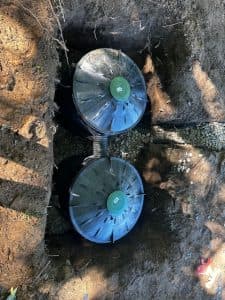
Determining the right system requires a professional assessment of your home’s specific water patterns. If you have water seeping through your basement walls or floor cracks, a French drain in the yard will likely not solve the problem because the water is coming from deep underground. You need an interior footer tile system.
However, if your basement is bone dry but your children can’t play in the backyard without getting stuck in the mud, or if water is pooling against your foundation siding, a French drain is the correct tool for the job. In many cases, especially on sloped properties in the Pittsburgh hills, a combination of both systems is the “gold standard” for total home protection.
Frequently Asked Questions
Can a French drain replace an interior footer tile?
Rarely. While an exterior French drain can reduce the amount of surface water that reaches the foundation, it cannot stop groundwater from rising up under the basement floor. For a truly dry basement, the interior footer tile is more effective.
Do footer tiles get clogged?
Modern footer tiles are wrapped in filtration fabric and surrounded by washed stone to prevent clogging. Older clay tiles, however, frequently fail due to tree root intrusion or sediment buildup, which is why replacement is a common foundation repair.
Which system is more expensive?
Generally, an interior footer tile system is a larger investment because it involves removing and replacing concrete and installing a sump pump. However, it also provides a higher ROI by protecting the structural integrity of the home.
Get a Custom Drainage Plan from Highlander
Don’t guess when it comes to your home’s foundation. Whether you are dealing with a “river” in your basement or a “lake” in your backyard, the experts at Highlander Waterproofing & Foundation Repair provide the technical expertise to diagnose the issue correctly the first time. We serve homeowners throughout Pennsylvania, New York, and Ohio with custom-engineered solutions and a Lifetime Transferable Warranty.
Stop the water before it stops you. Contact Highlander today for your free, no-pressure inspection and find out exactly which drainage system your home needs.

Giulio and Jennifer Bevilacqua are the dedicated and passionate owners of Highlander Waterproofing, a trusted name in basement waterproofing and foundation repair. With a commitment to protecting homes and ensuring the safety and well-being of families, Giulio and Jennifer have built Highlander Waterproofing into a premier service provider in the region. Their hands-on approach, combined with years of industry expertise, has helped them earn a stellar reputation for delivering reliable and effective waterproofing solutions.
The Bevilacquas pride themselves on offering personalized service, using proven techniques, and employing a team of highly trained professionals who share their dedication to quality workmanship. As a family-owned and operated business, Giulio and Jennifer emphasize integrity, transparency, and a genuine concern for their clients’ needs. They believe in building lasting relationships with their customers by ensuring each project is completed to the highest standards. Highlander Waterproofing continues to thrive under their leadership, offering innovative solutions and exceptional customer service that homeowners can depend on.