


For many homeowners, the sound of a heavy thunderstorm often brings a subtle, nagging worry: Will the basement stay dry? You have invested in a high-quality primary sump pump, and you trust it to keep your basement foundation clear of water. But what happens when the storm that causes the flooding is the same storm that knocks out your home’s electrical power? This is the scenario every homeowner dreads, and it is the exact moment when a standard sump pump fails.
At Highlander Waterproofing & Foundation Repair, we view a battery backup sump pump not as an optional accessory, but as a critical piece of infrastructure for any home with a basement. If you want to sleep soundly during the next heavy rain, understanding the role of backup systems is the first step toward true flood security.
The Anatomy of a Sump Pump Failure
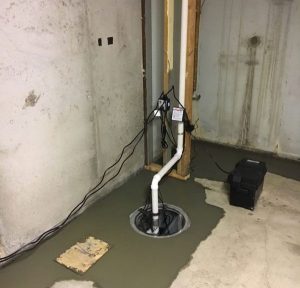
Most primary sump pumps are powered by your home’s main electrical grid. They are reliable workhorses under normal conditions, but they have a fatal flaw: dependency. When high winds or lightning strikes take out the power lines in your neighborhood, your primary pump goes silent. Unfortunately, the rain does not stop when the electricity does.
In fact, the heaviest rainfall often coincides with the most severe power outages. If your primary pump has no power, the water level in your sump pit will rise unchecked. Once the pit overflows, that water has nowhere to go but into your basement, where it can quickly cause thousands of dollars in damage to flooring, walls, stored belongings, and structural components.
How Battery Backup Systems Work
A battery backup system acts as a secondary, independent “safety net.” Installed in the same pit as your primary pump, these systems operate on their own power source—a deep-cycle marine battery or a dedicated battery bank—separate from your home’s main electrical lines.
The system is equipped with its own float switch. If the primary pump fails or loses power, the backup float switch rises, triggering the secondary pump to take over. This ensures that even if you are at work, on vacation, or asleep during a power outage, your basement protection remains active. These systems are designed to monitor the battery’s charge continuously, ensuring it is ready for deployment the moment it is needed.
Beyond Power Outages: Why You Need Redundancy
Power outages are not the only reason sump pumps fail. Mechanical failure, jammed float switches, or even a blown circuit breaker can render a primary pump useless. A battery backup system provides a layer of redundancy that covers these “human” or mechanical errors as well.
Consider the cost of a flooded basement. Between restoration services, the potential for mold growth, and the loss of personal property, the cost of a cleanup far outweighs the investment in a backup system. It is effectively an insurance policy that pays for itself the very first time it kicks in and saves you from a flood.
Maintenance: Keeping Your Safety Net Ready
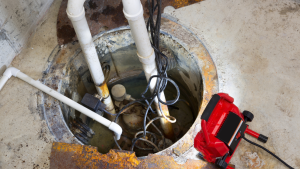
A battery backup system is only as good as its maintenance. We recommend that homeowners treat their backup system with the same attention as their primary pump:
- Quarterly Testing: Every three months, unplug the primary pump and pour a few gallons of water into the pit to ensure the backup system activates automatically.
- Battery Health: Check the water levels (if applicable) and the age of your battery. Most deep-cycle batteries used for backups have a lifespan of 3 to 5 years.
- Check Valves: Ensure your check valves are functioning properly to prevent water from cycling back into the pit.
Frequently Asked Questions
Can I install a battery backup myself?
While DIY installation is possible, we strongly recommend professional installation. A misaligned float switch or a faulty check valve can lead to system failure when you need it most. Our experts ensure the system is plumbed correctly and integrated seamlessly with your primary drainage.
How long will the backup system run on battery power?
Depending on the pump’s capacity and the battery’s amp-hour rating, a high-quality backup system can run continuously for several hours—or even days—intermittently. It is designed to bridge the gap during the critical period of a storm.
Do I need a second pump, or just a battery for my current one?
A dedicated secondary pump is far superior to a battery attachment for an existing pump. A secondary pump provides an entirely different mechanical motor, protecting you if your primary pump motor burns out entirely.
Don’t leave your home’s integrity to chance. When the power goes out, ensure your basement stays dry. Contact Highlander Waterproofing & Foundation Repair today to have our team evaluate your current setup. We can help you select and install a professional-grade battery backup system that provides genuine peace of mind, no matter the weather.

Giulio and Jennifer Bevilacqua are the dedicated and passionate owners of Highlander Waterproofing, a trusted name in basement waterproofing and foundation repair. With a commitment to protecting homes and ensuring the safety and well-being of families, Giulio and Jennifer have built Highlander Waterproofing into a premier service provider in the region. Their hands-on approach, combined with years of industry expertise, has helped them earn a stellar reputation for delivering reliable and effective waterproofing solutions.
The Bevilacquas pride themselves on offering personalized service, using proven techniques, and employing a team of highly trained professionals who share their dedication to quality workmanship. As a family-owned and operated business, Giulio and Jennifer emphasize integrity, transparency, and a genuine concern for their clients’ needs. They believe in building lasting relationships with their customers by ensuring each project is completed to the highest standards. Highlander Waterproofing continues to thrive under their leadership, offering innovative solutions and exceptional customer service that homeowners can depend on.
