


Many homeowners in Pennsylvania, Ohio, and New York assume that a sticking door is simply the result of seasonal humidity or an aging hinge. However, when “sticky” doors are paired with uneven floors or small cracks in the drywall, these aren’t just cosmetic annoyances—they are the classic warning signs of foundation settlement.
Understanding the difference between normal house “settling” and structural failure is the key to protecting your home’s equity and your family’s safety.
The Mechanics of Settlement: Why Houses Sink
Foundation settlement occurs when the soil beneath your home can no longer support the weight of the structure. In the Tri-State area, this is frequently caused by the “shrink-swell” cycle of our native clay soils. During wet seasons, the soil expands; during droughts or dry summers, the soil shrinks and pulls away from the foundation.
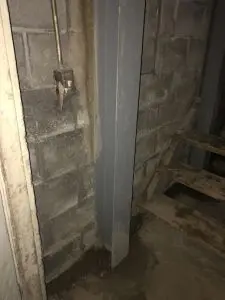
When the soil moves, the heavy concrete footer of your home follows. If one side of the house sinks faster than the other—a process known as differential settlement—it puts immense stress on the wooden framing above.
The “Upper-Level” Connection: Because your home’s frame is a rigid box, movement at the bottom is often most visible at the top. This is why foundation issues manifest as cracks near window headers or doors that won’t latch properly.
Top 4 Warning Signs You Shouldn’t Ignore
While a basement inspection is vital, you can often diagnose settlement from your living room by looking for these red flags:
- Sticking Doors and Windows: If a door suddenly requires an extra “tug” to open or won’t stay shut, the door frame has likely shifted out of square.
- Uneven or Sloping Floors: Do your floors feel like they are tilting toward one side of the room? A sloping floor is a direct indicator that the foundation pier or wall below has dropped.
- Stair-Step Cracks: Look at the exterior brickwork or interior basement walls. Cracks that follow the mortar lines in a “stair-step” pattern are a hallmark sign of active settlement.
- Gaps Around Trim: Noticeable gaps between the floor and baseboards, or between the wall and the ceiling, suggest the structure is pulling apart.
Is It “Normal” Settling or a Major Problem?
Every house settles slightly over the first few years after construction. However, “normal” settling is usually uniform and results in minor, hairline cracks. If you notice cracks wider than 1/8th of an inch, or if the issues are actively getting worse over time, you are likely dealing with a structural problem that requires professional intervention.
How Foundation Piering Restores Stability
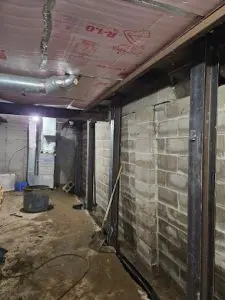
The solution to settlement isn’t just “filling the cracks.” To permanently fix the problem, we must bypass the unstable soil. At Highlander Waterproofing, we utilize high-strength steel push piers or helical piers.
These piers are driven deep into the earth until they reach load-bearing strata or bedrock. Once secure, they act like stilts for your home, allowing us to stabilize the foundation and, in many cases, lift the structure back toward its original level position.
Foundation Settlement FAQs
Q: Can I just plane down my sticking doors?
A: You can, but you are only treating the symptom. If the foundation continues to sink, the door will eventually stick again, and more severe structural damage will follow.
Q: Will foundation settlement affect my home’s value?
A: Yes. Unaddressed foundation issues can reduce a home’s market value by 10% to 20% and make it nearly impossible for a buyer to secure a mortgage.
Get a Professional Assessment Today
Don’t wait for a small crack to become a major collapse. Our experts provide a comprehensive 21-Point Inspection to determine exactly what is happening beneath your home.
Contact Highlander Waterproofing & Foundation Repair today to schedule your free estimate.

Giulio and Jennifer Bevilacqua are the dedicated and passionate owners of Highlander Waterproofing, a trusted name in basement waterproofing and foundation repair. With a commitment to protecting homes and ensuring the safety and well-being of families, Giulio and Jennifer have built Highlander Waterproofing into a premier service provider in the region. Their hands-on approach, combined with years of industry expertise, has helped them earn a stellar reputation for delivering reliable and effective waterproofing solutions.
The Bevilacquas pride themselves on offering personalized service, using proven techniques, and employing a team of highly trained professionals who share their dedication to quality workmanship. As a family-owned and operated business, Giulio and Jennifer emphasize integrity, transparency, and a genuine concern for their clients’ needs. They believe in building lasting relationships with their customers by ensuring each project is completed to the highest standards. Highlander Waterproofing continues to thrive under their leadership, offering innovative solutions and exceptional customer service that homeowners can depend on.