


When most homeowners think about gutter maintenance, they view it strictly as a roof-line issue. It is easy to assume that clogged troughs full of autumn leaves and pine needles only threaten your shingles, fascia boards, or landscaping. However, home structural diagnostics prove that what happens at your roof line directly impacts the structural core beneath your feet. In fact, neglected roof drainage is one of the leading catalysts for catastrophic, deep foundation settlement.
Throughout our regional climate, homes are built on complex expansive soils that are highly sensitive to water saturation levels. When your roof water management system breaks down, thousands of gallons of concentrated rainwater are directed straight into your home’s skeletal base. Understanding the physics of roof runoff and the severe structural threats it poses is essential to protecting your property’s safety and long-term equity.

The Deluge: From Your Shingles to Your Sub-Floor Slabs
To grasp the scale of the threat, it helps to look at the sheer volume of water your roof handles during a standard storm. A typical 2,000-square-foot residential roof collects roughly 1,200 gallons of water during a single inch of rainfall.
When your gutters are clean, this massive deluge is captured seamlessly, directed to downspouts, and discharged safely away from the house. But when debris clogs the troughs, the water has nowhere to go. It overflows the edges, cascading down your siding in massive, unchecked sheets and pooling in a concentrated perimeter directly against your exterior foundation walls—a zone known to structural engineers as the foundation “backfill trench.”
The Backfill Vulnerability: The soil immediately surrounding your house was dug up during original construction and backfilled afterward. This soil is naturally less compacted, softer, and far more porous than the undisturbed, stable earth further out in your yard, making it act like a massive underground sponge for overflowing roof water.
The Two Structural Threats Driven by Roof Water Runoff
When thousands of gallons of overflowing roof water saturate this backfill trench, it triggers two distinct, destructive subterranean processes that force a foundation to shift and sink:
1. Footer Washout and Differential Settlement
Your home’s immense weight relies entirely on the structural concrete “footer” poured deep underground beneath your basement walls. This footer must rest on dense, stable, well-compacted soil to support the house evenly. When a deluge of roof water continuously dumps into the backfill trench, it migrates beneath the footer, liquefying or washing away the supporting soil matrix.
As voids form underneath the concrete, specific sections of the footer lose their load-bearing base and sink into the earth. This is known as differential settlement. Because one part of the house is sinking while the rest stays in place, the immense twisting strain tears through your foundation, leaving behind diagonal stair-step block cracks, jammed doors, and unlevel floors upstairs.
2. Severe Lateral Hydrostatic Swelling
Our regional soils contain high concentrations of clay. Clay is an expansive material; it swells dramatically when wet and shrinks when dry. As overflowing roof runoff saturates the clay surrounding your walls, the soil expands with immense horizontal force, creating intense **hydrostatic pressure**. This pressure pushes inward against your concrete block walls until the masonry courses crack, shear, and begin to bow inward toward your basement.
Step-by-Step Preventative Drainage Management
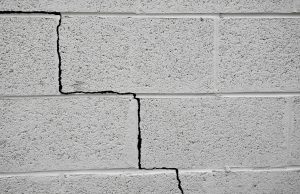
Protecting your home from deep foundation settlement requires a systematic approach to exterior water management. Address each drainage issue in the proper order before investing in more extensive waterproofing or structural repairs.
Install interior drainage when necessary. If expansive clay soils or a naturally high water table continue to trap moisture around your foundation despite proper grading, an interior drainage system paired with a heavy-duty sump pump can safely relieve groundwater pressure before it compromises your foundation footings.
Clean your gutters regularly. Remove leaves, twigs, and debris every spring and fall, or install high-quality gutter guards to prevent water from overflowing along your home’s exterior.
Extend your downspouts. Downspouts should discharge water at least 6 to 10 feet away from the foundation using rigid PVC extensions, underground drainage lines, or pop-up emitters.
Maintain proper grading. Inspect the first six feet of soil surrounding your home. The ground should slope away from the foundation by at least six inches to keep surface water from pooling against basement walls.
FAQs About Gutter Runoff and Foundation Shifts
Can overflowing gutters cause a house’s foundation to completely split?
Yes. Continuous water pooling softens specific localized areas of soil beneath the load-bearing footer. When one section of the footer sinks faster than the surrounding concrete, the structural tension splits mortar lines, and cracks block walls cleanly from the basement floor to the roof line.
How far away should downspouts empty from foundation walls?
To prevent roof water from immediately cycling back down into your home’s subterranean water table, downspouts should always discharge a minimum of 6 feet away from the foundation, though 10 to 12 feet is considered the engineering ideal for clay soils.
Can I fix an active basement water leak simply by cleaning my gutters?
If your basement water table is already high, cleaning your gutters will drastically reduce the volume of surface water feeding the problem, but it cannot stop existing groundwater from seeping through failing sub-floor joints. A comprehensive interior drainage system is required to handle high water tables permanently.
Protect Your Home’s Structural Integrity Today
True home protection requires looking at the big picture—assessing both outdoor drainage paths and indoor structural stability. Don’t wait for minor gutter overflows to turn into an incredibly expensive, multi-thousand-dollar foundation leveling project. Partner with a family-owned brand holding a 35-year legacy of engineering authority and a two-time BBB Torch Award for Ethics. Contact Highlander Waterproofing today to schedule an honest, comprehensive evaluation of your home’s structural health.

Giulio and Jennifer Bevilacqua are the dedicated and passionate owners of Highlander Waterproofing, a trusted name in basement waterproofing and foundation repair. With a commitment to protecting homes and ensuring the safety and well-being of families, Giulio and Jennifer have built Highlander Waterproofing into a premier service provider in the region. Their hands-on approach, combined with years of industry expertise, has helped them earn a stellar reputation for delivering reliable and effective waterproofing solutions.
The Bevilacquas pride themselves on offering personalized service, using proven techniques, and employing a team of highly trained professionals who share their dedication to quality workmanship. As a family-owned and operated business, Giulio and Jennifer emphasize integrity, transparency, and a genuine concern for their clients’ needs. They believe in building lasting relationships with their customers by ensuring each project is completed to the highest standards. Highlander Waterproofing continues to thrive under their leadership, offering innovative solutions and exceptional customer service that homeowners can depend on.
