


Discovering a strange, powdery substance spreading across your concrete block or poured basement walls can be incredibly alarming. For many homeowners, the immediate reaction is one of panic, assuming that their lower level has been overtaken by a toxic mold infestation. Given the serious health and structural risks associated with indoor fungal growth, this anxiety is completely understandable.
However, that white powder might not be alive at all. In our regional climate, porous basement masonry frequently plays host to a harmless chemical phenomenon known as efflorescence. While the powder itself is completely non-toxic, its presence is a critical warning sign that your foundation is under environmental duress. Understanding how to distinguish efflorescence from black mold is the first step toward accurately diagnosing and protecting your home’s structural core.
The Simple Scratch & Dissolve Test: Identifying the Substance
Before you invest in expensive mold remediation or structural engineering fixes, you can perform a quick, highly reliable diagnostic test right on your basement walls to identify exactly what you are dealing with:
| Characteristic | Mineral Efflorescence | Fungal Black Mold |
|---|---|---|
| Texture | Chalky, crystalline, or brittle; crumbles easily into fine salt dust. | Slimy, fuzzy, or velvety; smudges or smears under pressure. |
| Water Reaction | Dissolves instantly when sprayed with water. | Remains intact, repels water, or gets slicker. |
| Coloring | Pure white, light gray, or occasionally a dull yellow. | Dark green, charcoal gray, jet black, or dark brown. |
| Odor | Completely odorless. | Emits a distinct, earthy, pungent, or musty smell. |
Simply wear a protective glove, scrape a small amount of the white powder off the masonry wall, and drop it into a cup of water. If it dissolves cleanly like table salt, you are dealing with mineral efflorescence. If it floats or clumps together organically, you have a living mold growth.

The Real Danger: Efflorescence Is a Sign of Hydrostatic Pressure
If the scratch test proves the substance is efflorescence, you can breathe a sigh of relief regarding your respiratory health. Efflorescence is merely a natural salt deposit. Concrete blocks, mortar joints, and poured concrete are inherently porous materials filled with natural alkaline minerals. When rainwater saturates the soil outside your home, it creates intense lateral hydrostatic pressure, pushing groundwater directly into the porous exterior face of your basement walls.
As this water migrates through the masonry matrix via capillary action, it dissolves the internal mineral salts. When the moisture finally reaches the interior face of your basement wall, it evaporates into your home’s air, leaving the crystallized salt deposits behind as a white powder.
The Structural Early Warning: While the salt powder itself will not hurt you, it serves as your foundation’s physical early warning system. Efflorescence proves that high water tables are actively penetrating your walls, bringing destructive lateral pressure that can eventually cause hairline cracking, mortar decay, and structural bowing.
Why Cosmetic Sealing and Wire Brushing Always Fail Long-Term
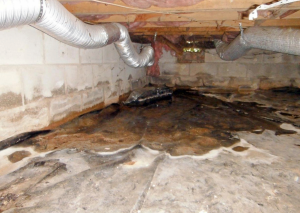
When faced with an unsightly wall covered in white salt deposits, many homeowners attempt to fix the problem by scrubbing the wall with a wire brush and painting over it with a heavy retail waterproofing paint. This cosmetic approach is guaranteed to fail within a matter of months.
Because the waterproofing paint is applied to the interior surface, it does nothing to stop the groundwater from migrating through the block from the outside. The hydrostatic pressure will continue to drive water into the masonry, trapping the moisture directly behind the new layer of paint. Within a single season, the building pressure will cause the paint layer to blister, bubble, and peel away in large sheets, pushing a fresh layer of efflorescence right along with it.
True mitigation requires permanent sub-floor interior water management. At Highlander Waterproofing, we install engineered drainage systems that intercept groundwater at the cove joint and redirect it safely away from the masonry, lowering the sub-grade water table and stopping mineral leaching permanently.
FAQs About Mineral Leaching and Concrete Porosity
Does ongoing efflorescence slowly weaken concrete block walls?
Yes. Continuous mineral leaching over several decades gradually strips concrete blocks and mortar joints of their native structural binders. Over time, the masonry becomes increasingly brittle, soft, and prone to advanced flaking or hairline cracking.
Can high indoor humidity cause efflorescence to form without an outdoor leak?
No. While high indoor humidity can foster living mold growth on wood or drywall surfaces, efflorescence strictly requires active liquid water migration through the concrete block to dissolve and transport the internal mineral salts to the surface.
How long does a professional drainage solution take to stop efflorescence?
Once Highlander installs an interior pressure-relief system, the subterranean water table is lowered permanently. The walls will dry out completely over a few weeks, halting the migration process so you can cleanly wire-brush away the old residue for good.
Secure Your Foundation with an Honest Evaluation
Efflorescence is a clear signal that your foundation walls are battling high soil water pressure every time it rains. Don’t wait for structural bowing or active flooding to follow. Partner with a family-owned brand holding a 35-year legacy of engineering authority and a two-time BBB Torch Award for Ethics. Contact Highlander Waterproofing today to arrange your honest, pressure-free evaluation.

Giulio and Jennifer Bevilacqua are the dedicated and passionate owners of Highlander Waterproofing, a trusted name in basement waterproofing and foundation repair. With a commitment to protecting homes and ensuring the safety and well-being of families, Giulio and Jennifer have built Highlander Waterproofing into a premier service provider in the region. Their hands-on approach, combined with years of industry expertise, has helped them earn a stellar reputation for delivering reliable and effective waterproofing solutions.
The Bevilacquas pride themselves on offering personalized service, using proven techniques, and employing a team of highly trained professionals who share their dedication to quality workmanship. As a family-owned and operated business, Giulio and Jennifer emphasize integrity, transparency, and a genuine concern for their clients’ needs. They believe in building lasting relationships with their customers by ensuring each project is completed to the highest standards. Highlander Waterproofing continues to thrive under their leadership, offering innovative solutions and exceptional customer service that homeowners can depend on.