


Buffalo homeowners regularly deal with wet basements caused by heavy rain, melting snow, groundwater buildup, foundation cracks, and drainage problems around the home. When water begins entering a basement, two of the most common solutions are an interior French drain system and exterior foundation waterproofing.
Which is better for a Buffalo home? An interior French drain is often the more practical and cost-effective option when water is entering through the cove joint or rising beneath the basement floor. Exterior waterproofing may be more appropriate when damaged foundation walls, exterior cracks, or failed exterior drainage must be addressed directly.
The right solution depends on where the water is entering, the condition of the foundation, the surrounding property, and whether hydrostatic pressure is contributing to the problem.
Why Buffalo Basements Are Vulnerable to Water Intrusion
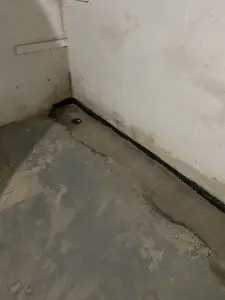
Homes throughout Buffalo and Western New York face a difficult combination of seasonal precipitation, snow accumulation, freeze-thaw cycles, and spring snowmelt. When rain or melting snow saturates the soil around a foundation, groundwater pressure can increase significantly.
This pressure, known as hydrostatic pressure, can force water through:
- The cove joint where the basement wall meets the floor
- Cracks in poured concrete or concrete block walls
- Porous masonry
- Gaps around utility penetrations
- Cracks in the basement floor
- Improperly sealed basement windows
- Areas affected by poor grading or inadequate exterior drainage
Water appearing at the floor-wall joint does not necessarily mean that the visible seam is defective. It can indicate that groundwater has accumulated beneath or around the foundation and is seeking the easiest path into the basement.
A professional inspection can determine whether the problem requires an interior drainage system, exterior waterproofing, crack repair, grading improvements, a sump pump, or a combination of solutions.
What Is Exterior Foundation Waterproofing?
Exterior waterproofing is designed to reduce water penetration from outside the foundation. It typically involves excavating the soil next to the affected wall, exposing the foundation, and installing waterproofing and drainage materials.
Depending on the property and the source of the leak, the process may include:
- Excavating down to the foundation footing
- Cleaning and preparing the exterior foundation wall
- Repairing visible cracks or damaged masonry
- Applying a waterproof coating or membrane
- Installing a drainage or protection board
- Repairing or replacing an exterior footing drain
- Backfilling the excavated area
Advantages of exterior waterproofing
Exterior waterproofing can address water at the outside surface of the foundation before it enters the wall. It may be particularly valuable when exterior cracks, deteriorated masonry, or failed waterproofing materials are contributing to the problem.
Potential disadvantages
Exterior excavation is generally more disruptive than an interior drainage installation. Access may be limited by decks, patios, porches, driveways, utilities, HVAC equipment, landscaping, or neighboring properties.
The cost and installation time can also vary considerably based on excavation depth, accessibility, soil conditions, and the length of the affected foundation wall.
What Is an Interior French Drain System?
An interior French drain—also called an interior perimeter drain or sub-slab drainage system—is designed to collect groundwater and relieve pressure beneath the basement floor.
During installation, technicians remove a narrow section of concrete around the affected perimeter of the basement. A drainage channel is installed next to the foundation footing and covered with clean stone. The concrete is then restored over the drainage system.
Water collected beneath the floor or near the cove joint flows through the drainage channel to a sump pump system, which discharges it away from the foundation.
Rather than trying to block groundwater after pressure has developed, the system gives the water a controlled path out of the basement.
Advantages of an interior French drain
An interior system offers several practical benefits:
- No excavation around the outside of the home
- Effective control of water entering at the cove joint
- Relief from groundwater pressure beneath the floor
- Less disruption to landscaping, patios, and driveways
- Accessibility for inspection or future service
- Compatibility with sump pumps and battery backup systems
- Ability to address multiple seepage points along the basement perimeter
Potential disadvantages
The basement perimeter must be accessible during installation. Finished walls, built-in cabinets, flooring, appliances, or stored belongings may need to be moved or temporarily removed.
An interior drainage system also manages water after it reaches the foundation area. If the home has significant exterior wall deterioration or a structural foundation problem, additional repairs may be necessary.
Interior French Drain vs. Exterior Waterproofing: Quick Comparison
| Factor | Interior French drain | Exterior waterproofing |
|---|---|---|
| Primary purpose | Collects and redirects groundwater beneath or beside the slab | Reduces water penetration through the exterior foundation wall |
| Best suited for | Cove-joint seepage, groundwater below the floor, recurring basement water | Exterior wall cracks, failed exterior barriers, accessible foundation walls |
| Excavation | Interior perimeter trench | Exterior excavation to the footing |
| Yard disruption | Minimal | Can affect landscaping, decks, patios, or driveways |
| Sump pump needed | Usually | Depends on the drainage design |
| Future access | Generally accessible from inside | Components are buried outside |
| Structural repairs included | No; performed separately if needed | Exterior cracks or wall damage may be repaired during excavation |
| Relative cost | Often lower | Often higher due to excavation and restoration |
Which Waterproofing Method Is Better for Buffalo Homes?
For many Buffalo homes with water entering through the cove joint or basement floor, an interior French drain connected to a properly sized sump pump is often the most practical solution. It manages groundwater pressure without requiring extensive excavation around the house.
However, exterior waterproofing may be the better choice when:
- Water enters through a specific exterior wall defect
- The foundation wall requires repair from the outside
- An existing exterior waterproofing system has failed
- The affected wall is readily accessible
- Surface drainage alone cannot correct the problem
In some cases, the best waterproofing plan combines several improvements. An interior drainage system may be paired with crack repair, wall vapor protection, sump pump installation, battery backup, gutter or downspout corrections, and exterior grading improvements.
This is why the visible location of the water should not be the only factor used to choose a repair. The complete drainage and foundation system must be evaluated.
Do You Need a Battery Backup Sump Pump in Buffalo?
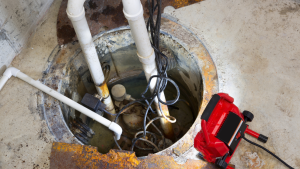
A battery backup is strongly worth considering when an interior French drain depends on an electric sump pump. Severe weather and rapid snowmelt can increase groundwater volume at the same time a power interruption prevents the primary pump from operating.
A backup system provides an additional layer of protection if:
- The primary pump loses power
- The primary unit fails
- Water enters the sump faster than expected
- No one is home to notice a pump problem
The appropriate pump capacity and backup configuration should be selected based on the home’s drainage conditions and expected water volume.
Signs You May Need Professional Basement Waterproofing
Schedule an inspection if you notice:
- Water along the basement floor-wall joint
- Puddles after rain or snowmelt
- White mineral deposits on foundation walls
- Damp or musty basement odors
- Mold or mildew growth
- Peeling paint or damaged drywall
- Rust around appliances or support posts
- Cracks in the basement walls or floor
- A sump pump that runs constantly or cannot keep up
Recurring water should be investigated even if the basement does not experience a major flood. Persistent moisture can damage finishes and stored belongings while making the basement less comfortable and usable.
Frequently Asked Questions
Is an interior French drain better than exterior waterproofing?
An interior French drain is often better for groundwater entering through the cove joint or beneath the basement floor. Exterior waterproofing may be better when water is penetrating through exterior wall cracks or damaged waterproofing. An inspection is needed to identify the actual source.
How does an interior French drain stop basement flooding?
The drain collects groundwater beneath or beside the basement slab and directs it to a sump pump. The pump then discharges the water away from the foundation before it can spread across the basement floor.
Can an interior French drain be installed in a finished basement?
Yes, but flooring, wall finishes, cabinets, or stored belongings near the perimeter may need to be temporarily removed. The amount of disruption depends on the basement layout and the area requiring drainage.
Does an interior French drain need a sump pump?
Most interior French drain systems discharge into a sump basin and rely on a sump pump to move collected water away from the home. The discharge location and pump capacity are important parts of the system design.
Will an interior French drain fix leaking wall cracks?
A French drain can collect water that reaches the bottom of the wall, but it does not structurally repair a foundation crack. Active cracks may require a separate crack repair or structural evaluation.
Can exterior waterproofing damage landscaping?
Exterior waterproofing requires excavation next to the foundation, so landscaping, walkways, patios, decks, or other exterior features may be affected. The extent of the disruption depends on access to the foundation.
How much does basement waterproofing cost in Buffalo, NY?
The cost depends on the source of the water, basement size, drainage length, excavation requirements, sump pump configuration, accessibility, and whether foundation repairs are needed. An on-site assessment is necessary for an accurate recommendation and estimate.
Who installs interior French drains in Buffalo, NY?
Highlander Waterproofing & Foundation Repair provides customized basement waterproofing in Buffalo, NY, including drainage and sump pump solutions. The Buffalo office is located at 300 International Drive, Buffalo, NY 14221.
Get the Right Waterproofing Solution for Your Buffalo Home
You should not have to clean up water every time Buffalo experiences heavy rain or melting snow. Highlander Waterproofing & Foundation Repair evaluates the source of the moisture and recommends a solution based on the actual condition of your basement—not a one-size-fits-all repair.
Schedule a free, no-obligation basement inspection with Highlander’s Buffalo team or call (716) 249-4144 to discuss your wet basement. Your inspection can help determine whether you need an interior French drain, exterior waterproofing, crack repair, sump pump improvements, or a combination of services.
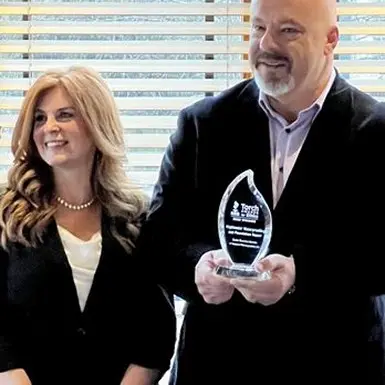
Giulio and Jennifer Bevilacqua are the dedicated and passionate owners of Highlander Waterproofing, a trusted name in basement waterproofing and foundation repair. With a commitment to protecting homes and ensuring the safety and well-being of families, Giulio and Jennifer have built Highlander Waterproofing into a premier service provider in the region. Their hands-on approach, combined with years of industry expertise, has helped them earn a stellar reputation for delivering reliable and effective waterproofing solutions.
The Bevilacquas pride themselves on offering personalized service, using proven techniques, and employing a team of highly trained professionals who share their dedication to quality workmanship. As a family-owned and operated business, Giulio and Jennifer emphasize integrity, transparency, and a genuine concern for their clients’ needs. They believe in building lasting relationships with their customers by ensuring each project is completed to the highest standards. Highlander Waterproofing continues to thrive under their leadership, offering innovative solutions and exceptional customer service that homeowners can depend on.