


For homeowners in Harrisburg and throughout Central Pennsylvania, noticing step-pattern cracks in exterior brickwork or interior doors that suddenly bind in their frames can be deeply concerning. These visible signs often point to foundation settlement—a serious structural issue where a home’s concrete footings sink unevenly into the surrounding soil. Left unaddressed, ongoing settlement damages your home’s structural framing, lowers property value, and risks catastrophic foundation failure.
Fortunately, modern geotechnical engineering provides permanent, proven solutions to halt sinking footings and restore structural stability: helical piers and foundation underpinning. Understanding why Central PA soils shift and how piering systems stabilize your home empowers you to protect your most valuable investment.
What Causes Foundation Settlement in Central Pennsylvania?

Foundation settlement in the Harrisburg region is driven primarily by local geology and weather patterns. The Susquehanna Valley features varied soil profiles, including pockets of expansive clay, alluvial silt, and karst topography (limestone formations prone to erosion).
During dry summer months, clay soil loses moisture and shrinks, creating hollow voids beneath heavy concrete footings. Conversely, heavy spring rains or leaking underground pipes wash away fine soil particles, reducing the soil’s bearing capacity. When the soil beneath your home can no longer support the weight of the structure above, the footings sink into the soft earth, resulting in differential foundation settlement.
Top Structural Warning Signs Your Home Is Sinking
Foundation settlement rarely happens overnight, but it leaves clear visual warning signs as the house shifts out of alignment:
- Exterior Brick & Mortar Cracks: Classic “stair-step” cracks running along brick veneer or cinder block mortar joints indicate one section of the foundation is dropping faster than the rest.
- Interior Drywall Fractures: Diagonal cracks extending upward from the top corners of interior door frames and window openings.
- Sticking Doors & Windows: Doors that suddenly jam against their jambs or swing open on their own due to out-of-square framing.
- Slanted or Uneven Floors: Visible sloping along interior floorboards or gaps forming between baseboards and flooring.
Engineering Solutions: Helical Piers & Resistance Underpinning
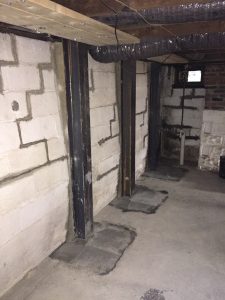
Cosmetic repairs—such as filling brick cracks with mortar or patching drywall—do nothing to stop ongoing settlement. Permanent structural repair requires transferring the weight of your home off weak surface soil and onto stable load-bearing strata deep underground.
1. What Are Helical Piers?
Helical piers are heavy-duty, galvanised steel shafts equipped with helical screw plates (flights). Driven deep into the earth using hydraulic machinery, these piers turn like corkscrews through unstable soil layers until reaching dense, load-bearing soil strata or solid bedrock.
2. The Underpinning and Lifting Process
Once the helical piers reach the required depth and torque resistance, heavy-duty steel foundation brackets are securely mounted to the bottom of your home’s exposed concrete footing. Using synchronized hydraulic jacks, structural technicians stabilize the foundation and, whenever possible, carefully lift the settled structure back toward its original, level position.
Once lifting is complete, the brackets are locked permanently onto the piers, and the excavation sites around the footings are backfilled, leaving the home permanently supported above shifting soils.
Why Early Intervention Saves Thousands
Foundation settlement is a progressive structural defect; it never improves on its own. Addressing footing movement at the first sign of stair-step cracking prevents secondary damage to plumbing lines, gas connections, roof framing, and interior finishes, ultimately saving tens of thousands of dollars in compound structural repairs.
Frequently Asked Questions
How deep do foundation helical piers need to be driven?
Piers are driven down until they reach dense, load-bearing soil strata or solid bedrock, which typically ranges from 10 to 40 feet or deeper depending on local Harrisburg soil conditions.
Can you lift a house back to its original level after settlement?
In most cases, engineered helical pier systems can hydraulically lift settled foundations back toward their original level position without damaging the structural frame.
How long do steel foundation helical piers last?
Engineered, heavy-gauge galvanized steel piers resist soil corrosion and provide permanent structural support for the lifespan of the home, backed by transferable warranties.
Protect Your Harrisburg Home from Further Settlement
Foundation settlement does not correct itself, and surface repairs alone cannot address the unstable soil beneath your home. If you notice stair-step cracks, uneven floors, sticking doors, or other signs of structural movement, scheduling an evaluation early can help limit additional damage and prevent more extensive repairs.
Highlander Waterproofing & Foundation Repair provides professional foundation settlement assessments throughout Harrisburg and Central Pennsylvania. Our team can evaluate the extent of the movement and determine whether helical piers, underpinning, or another stabilization method is appropriate for your property.
Protect your home’s structure, safety, and long-term value. Contact Highlander today to schedule your free foundation assessment in Harrisburg, PA.

Giulio and Jennifer Bevilacqua are the dedicated and passionate owners of Highlander Waterproofing, a trusted name in basement waterproofing and foundation repair. With a commitment to protecting homes and ensuring the safety and well-being of families, Giulio and Jennifer have built Highlander Waterproofing into a premier service provider in the region. Their hands-on approach, combined with years of industry expertise, has helped them earn a stellar reputation for delivering reliable and effective waterproofing solutions.
The Bevilacquas pride themselves on offering personalized service, using proven techniques, and employing a team of highly trained professionals who share their dedication to quality workmanship. As a family-owned and operated business, Giulio and Jennifer emphasize integrity, transparency, and a genuine concern for their clients’ needs. They believe in building lasting relationships with their customers by ensuring each project is completed to the highest standards. Highlander Waterproofing continues to thrive under their leadership, offering innovative solutions and exceptional customer service that homeowners can depend on.
