


Discovering a fissure running across your basement floor can be alarming. Learn how to tell the difference between normal concrete shrinkage and a true structural threat.
Why Concrete Floor Cracks Happen: Shrinkage vs. Active Movement
Almost every home throughout Western Pennsylvania, Western New York, and Eastern Ohio features at least one thin crack extending across the basement floor. Concrete is inherently a porous, water-based material. As it cures during the initial construction phase, the moisture evaporates, causing the slab to shrink and pull apart slightly. This process naturally yields small, shallow fissures.
Because your basement floor slab is poured independently of your home’s main weight-bearing walls, simple shrinkage cracks are primarily a cosmetic nuisance. However, when a floor crack begins to widen, shift vertically, or weep water, it has transitioned from a standard curing blemish into a clear indicator of structural stress beneath your house.
The Sorting Matrix: Signs Your Slab Crack Is a Structural Threat
To determine whether you can safely seal a crack yourself or if you require an engineered evaluation, you need to examine the physical behavior and dimensions of the breach.
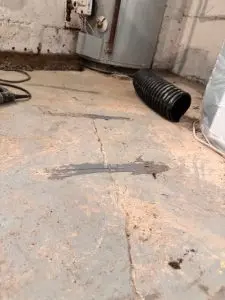
Vertical Displacement (Heaving Where One Side Sits Higher)
Run your hand or your foot safely across the crack. Do both sides of the concrete slab sit completely flush, or has one side lifted higher than the other? If you notice a vertical ledge—known as heaving—this is a sign that powerful forces are actively pushing up against the bottom of your floor. This indicates unstable subsoil behavior or extreme upward hydrostatic pressure.
Cracks That Continually Widen or Show Deep Pitting
Hairline fissures under 1/8 inch are rarely a structural emergency if they remain stable. However, if a crack expands past 1/4 inch, exhibits jagged, breaking edges, or shows signs of the concrete pitting and crumbling away, the slab is undergoing severe structural stress. This widening indicates that the ground beneath the floor is shifting or sinking unevenly.
Groundwater Actively Bubbling Through the Floor Seams
A basement floor crack should never double as a water feature. If you notice damp concrete borders, active puddles, or a white, powdery residue (efflorescence) accumulating along the edges of the crack, you have a water problem. Active water entry means the soil under your home is completely saturated, creating an unmanaged underground water table that is using your floor cracks as a pressure-relief valve.
Hydrostatic Upward Pressure: When the Water Table Attacks Your Slab
What causes a basement floor to heave, crack, and leak? The root cause is a natural physical force called hydrostatic pressure. The regional soils throughout our tristate territory are packed with dense, expandable clay. When heavy spring rains arrive, or winter snowloads thaw quickly, this clay soil acts like a giant sponge, trapping water and expanding dramatically.
As the groundwater table rises beneath your basement slab, the trapped water exerts immense upward physical force. Concrete slabs are incredibly strong against downward weight, but they are relatively weak against upward tensile pressure. Under continuous hydrostatic force, the concrete slab bends, snaps, and cracks, allowing groundwater to flood upward into your home.
How Sunken Slabs Intersect with the Main Foundation Footing Settlement
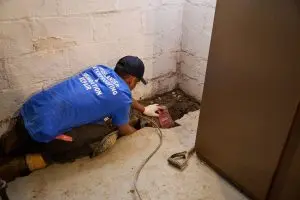
Sometimes, a basement floor crack doesn’t push upward—it drops down. If a section of your floor slab is sinking or pulling away from the perimeter foundation walls, the soil beneath your home may be voiding. This occurs when broken underground pipes, poor exterior yard drainage, or dry summer droughts cause the underlying earth to wash away or shrink.
When the soil drops, your heavy foundation footings lose their support system. This leads to differential settlement, which ripples structural damage upward through your entire property structure, resulting in sticking doors, warped window frames, and diagonal cracks in your upper drywall levels.
FAQ: Reading Concrete Slab Cracks
Is a hairline crack in a basement floor normal?
Yes. Hairline cracks that are narrower than 1/8 inch, lie completely flat, and remain dry are standard characteristics of concrete shrinkage and are not considered structural threats.
Why is water leaking through my basement floor cracks?
Rising subterranean water tables create immense hydrostatic pressure. Water naturally seeks the path of least resistance, forcing its way through any available floor cracks to relieve that pressure.
Can you fix a heaving concrete floor by pouring self-leveler over it?
No. Self-leveling compounds are strictly cosmetic products. If the underlying subsoil forces or hydrostatic pressure issues are not resolved first, the moving slab will quickly crack right through the new topcoat.
Get an Honest, Clear Diagnosis
You shouldn’t have to guess whether your home’s structural foundation is safe. At Highlander Waterproofing & Foundation Repair, we use precision laser levels and diagnostic tools to evaluate the health of your basement floor without high-pressure sales lines or predatory scare tactics.
Whether your home simply needs flexible joint vapor sealing or a full sub-floor pressure relief drainage network, we provide firm contract pricing backed by a Lifetime Transferable Warranty. Contact our local regional branch today to request your free, zero-obligation inspection.

Giulio and Jennifer Bevilacqua are the dedicated and passionate owners of Highlander Waterproofing, a trusted name in basement waterproofing and foundation repair. With a commitment to protecting homes and ensuring the safety and well-being of families, Giulio and Jennifer have built Highlander Waterproofing into a premier service provider in the region. Their hands-on approach, combined with years of industry expertise, has helped them earn a stellar reputation for delivering reliable and effective waterproofing solutions.
The Bevilacquas pride themselves on offering personalized service, using proven techniques, and employing a team of highly trained professionals who share their dedication to quality workmanship. As a family-owned and operated business, Giulio and Jennifer emphasize integrity, transparency, and a genuine concern for their clients’ needs. They believe in building lasting relationships with their customers by ensuring each project is completed to the highest standards. Highlander Waterproofing continues to thrive under their leadership, offering innovative solutions and exceptional customer service that homeowners can depend on.