


When groundwater threatens your foundation, you face a critical choice. Discover whether an interior pressure-relief system or an exterior excavation barrier is the right choice for your home.
Comparing Interior vs. Exterior Waterproofing Philosophies
If you have discovered damp baseboards, a musty odor, or active puddles forming along your basement floor, you are dealing with a water management problem. Across the shifting clay landscapes of Western Pennsylvania, Western New York, and Eastern Ohio, rising groundwater tables put intense physical stress on underground foundations. When it comes to fixing a wet basement, professional contractors generally look at two completely different engineering paths: stopping the water from the outside before it touches the masonry, or capturing and redirecting it from the inside after it enters.
Choosing between interior and exterior waterproofing isn’t just a matter of price; it dictates how much disruption your property will experience, how water pressure is managed against your walls, and how long the system will protect your home. To make an informed decision, you need to understand exactly how each system handles subterranean water forces.
Deep Yard Excavation: The High Costs and Realities of Exterior Systems
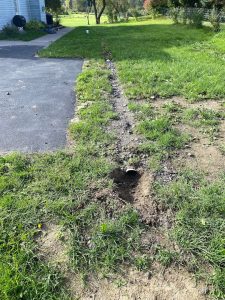
Exterior waterproofing is a defensive approach designed to keep water from ever touching your foundation walls. This process requires heavy earth-moving equipment to excavate a deep trench around the entire outside perimeter of your home, digging all the way down to the concrete footings.
Once the foundation walls are fully exposed, the masonry is cleaned, cracks are repaired, and a thick, waterproof elastomeric membrane or specialized drainage board is applied to seal the exterior. At the bottom of the trench, a new perforated drain pipe—often called an exterior French drain—is installed in a bed of gravel to collect groundwater and route it away from the house via gravity or an outdoor pump.
While this method keeps the foundation walls dry, it comes with major real-world challenges. Exterior excavation is incredibly invasive. It requires tearing up and removing anything sitting near your foundation, including concrete patios, front porches, walkways, air conditioning units, and expensive landscaping. Additionally, because the excavated soil must be backfilled into the trench, it remains loose and porous, often drawing even more rainwater down toward the wall over time. If a root punctures the exterior membrane years later, repairing the leak requires re-excavating the entire yard all over again.
Sub-Floor Drainage Channels: How Modern Interior Systems Manage Water
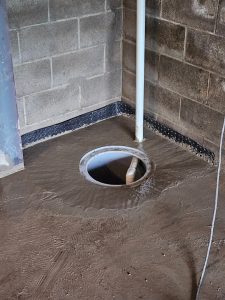
Interior waterproofing operates on a different engineering principle: instead of fighting the water from the outside, it safely relieves the hydrostatic pressure pressing against the house. When heavy rain saturates the earth, water fills the hollow cores of concrete blocks and builds up under the floor slab. An interior system creates a continuous path of least resistance to capture this water and pump it out safely.
To install an interior network, a 12-inch channel of the concrete floor is carefully broken out along the interior base of the foundation walls. Next, precision weep holes are drilled into the very bottom row of the hollow concrete blocks. These holes allow water trapped inside the wall cores to drain out completely, preventing it from climbing up into your drywall framing.
A heavy-duty, perforated drainage conduit is then placed in a sloped gravel trench along the footing. This conduit routes all collected water directly into a high-capacity submersible sump pump basin equipped with automatic float switches and battery backups. Once the drainage lines are secure, fresh concrete is poured over the channel, restoring the basement floor to a clean, flush finish. Because the system sits entirely indoors, it is completely protected from shifting soils, freezing surface temperatures, and root intrusion, allowing it to perform reliably for decades.
Side-by-Side Reality Check: Disruptiveness, Warranty Length, and Total Investment
When weighing your options, comparing the practical impacts of both systems side-by-side helps clarify the best path forward for your budget and home layout:
| Comparison Factor | Interior Sub-Floor Drainage | Exterior Membrane Excavation |
|---|---|---|
| Property Disruption | Low. Work is contained entirely inside the basement; yard and landscaping remain untouched. | High. Requires heavy machinery to dig up the yard, destroying plants, decks, and walkways. |
| Average Project Cost | Moderate and predictable based on linear footage. | High to Extreme due to heavy machinery labor and landscaping restoration. |
| Long-Term Reliability | Indefinite. Shielded from outdoor freezing, soil shifts, and root clogs. | Variable. External membranes can degrade over time from soil movement and roots. |
| Installation Time | Typically 2 to 4 days for most residential basements. | Can take 1 to 2+ weeks, depending on weather conditions and dig depth. |
FAQ: Choosing Your Waterproofing Strategy
Does interior waterproofing just hide the water problem?
No. By drilling weep holes at the base of hollow blocks, interior drainage immediately empties the water out of the cores, immediately relieving hydrostatic pressure before it can stress or bow the wall structure.
Why is exterior waterproofing so expensive?
The high cost isn’t the materials—it is the heavy labor and machinery required to dig down 6 to 8 feet around your home, coupled with the massive expense of rebuilding porches, decks, and landscaping after backfilling.
Will interior waterproofing require tearing up my finished basement?
A small section of the floor perimeter must be accessed for installation, which means removing the bottom portion of the drywall and carpet along the exterior walls. However, an experienced team minimizes disruption and finishes the concrete cleanly so you can restore the wall easily.
Get a Clear, Direct Recommendation from Highlander
You shouldn’t have to navigate confusing contractor pitches or high-pressure sales lines just to protect your home from water damage. At Highlander Waterproofing & Foundation Repair, we don’t believe in predatory upselling. Our non-commissioned property inspectors use diagnostic gear to map out water entry paths and recommend the most effective, least disruptive fix for your budget.
Every system we install is backed by our comprehensive lifetime transferable warranty. Contact our local regional branch today to request your free, zero-obligation wet basement inspection.

Giulio and Jennifer Bevilacqua are the dedicated and passionate owners of Highlander Waterproofing, a trusted name in basement waterproofing and foundation repair. With a commitment to protecting homes and ensuring the safety and well-being of families, Giulio and Jennifer have built Highlander Waterproofing into a premier service provider in the region. Their hands-on approach, combined with years of industry expertise, has helped them earn a stellar reputation for delivering reliable and effective waterproofing solutions.
The Bevilacquas pride themselves on offering personalized service, using proven techniques, and employing a team of highly trained professionals who share their dedication to quality workmanship. As a family-owned and operated business, Giulio and Jennifer emphasize integrity, transparency, and a genuine concern for their clients’ needs. They believe in building lasting relationships with their customers by ensuring each project is completed to the highest standards. Highlander Waterproofing continues to thrive under their leadership, offering innovative solutions and exceptional customer service that homeowners can depend on.
